
Ipazia

AI-assisted recruiting platform

⬤ 01. Challenges

Designing an AI-powered platform for smarter recruiting workflows

Ipazia is an AI-powered recruiting platform designed to support companies and recruiters in the search, analysis and selection of candidates.

The project was born with the goal of making recruiting workflows more efficient, reducing the time needed to identify suitable profiles and improving the quality of candidate evaluation through digital tools and AI-assisted features.

The main challenge was to introduce artificial intelligence into a sensitive decision-making process without removing control from the recruiter.

The goal was not to replace human evaluation, but to design a product capable of supporting recruiters in the most repetitive and complex activities: candidate search, profile analysis, skill comparison, shortlist management and selection tracking.

⬤ 02. Reflection

Turning complex candidate data into clear decisions

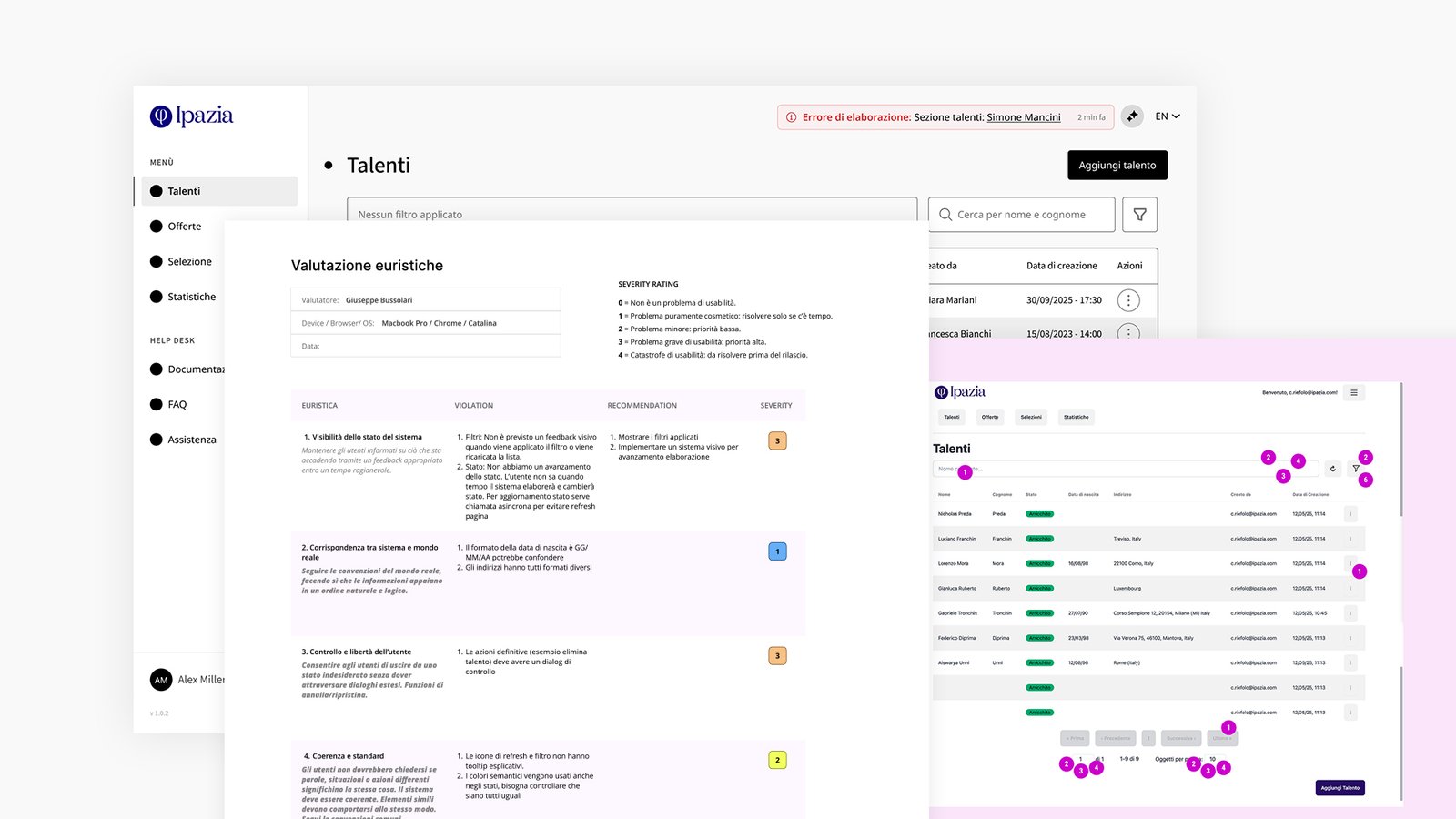
Preliminary UX analysis

I worked on the UX and product experience of the platform, with a specific focus on how recruiters create, manage and evaluate candidate searches.

The product needed to handle multiple levels of information: job positions, candidate profiles, skills, notes, AI suggestions, shortlists and selection statuses.

For this reason, one of the key design goals was to create a clear information architecture that could help recruiters navigate the platform without losing context.

 
Problem

The main issue was not only organizing a large amount of candidate data, but also making the role of AI understandable, transparent and useful.

AI had to support the recruiter, not take over the process.

This required an interface able to show suggestions, summaries and relevant insights while preserving human oversight and decision-making control.

⬤ 03. Ideation

Making AI feel like an advisor, not an automatic decision-maker

A central part of the design work was defining the role of AI inside the recruiting experience.

Instead of presenting AI as an autonomous system, I designed it as an advisor: a support layer able to help recruiters read profiles, identify relevant skills, surface missing information and prioritize candidates.

This approach made the experience closer to the real way recruiters work, where decisions are based on interpretation, comparison and context.

The interface was designed to make AI outputs understandable and actionable, while keeping the final evaluation in the hands of the recruiter.

Key areas

Candidate search

Recruiter dashboard

AI-assisted profile analysis

Skills and experience comparison

Shortlist management

Selection workflow

Human oversight

⬤ 04. Experience

Designing the recruiter dashboard and selection flows

Recruiter workspace

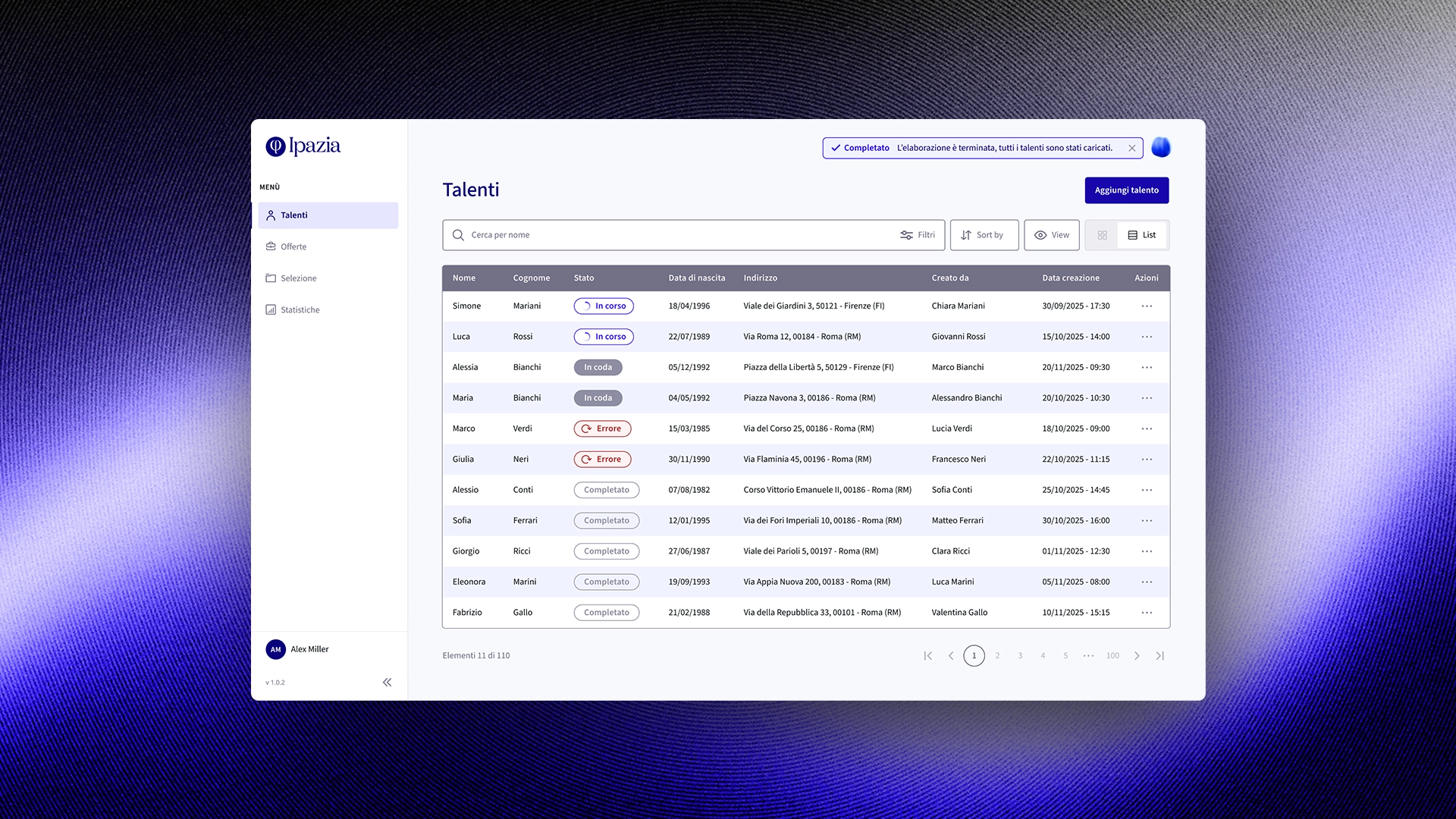
I designed the recruiter workspace as a structured environment where users could manage searches, access candidate lists and monitor selection progress.

The system allowed recruiters to create a new search, assign it a name, define selection criteria and view the candidates that best matched the position.

The interface was built to support focus, clarity and scalability, reducing unnecessary complexity in a workflow that can easily become fragmented.

Candidate evaluation

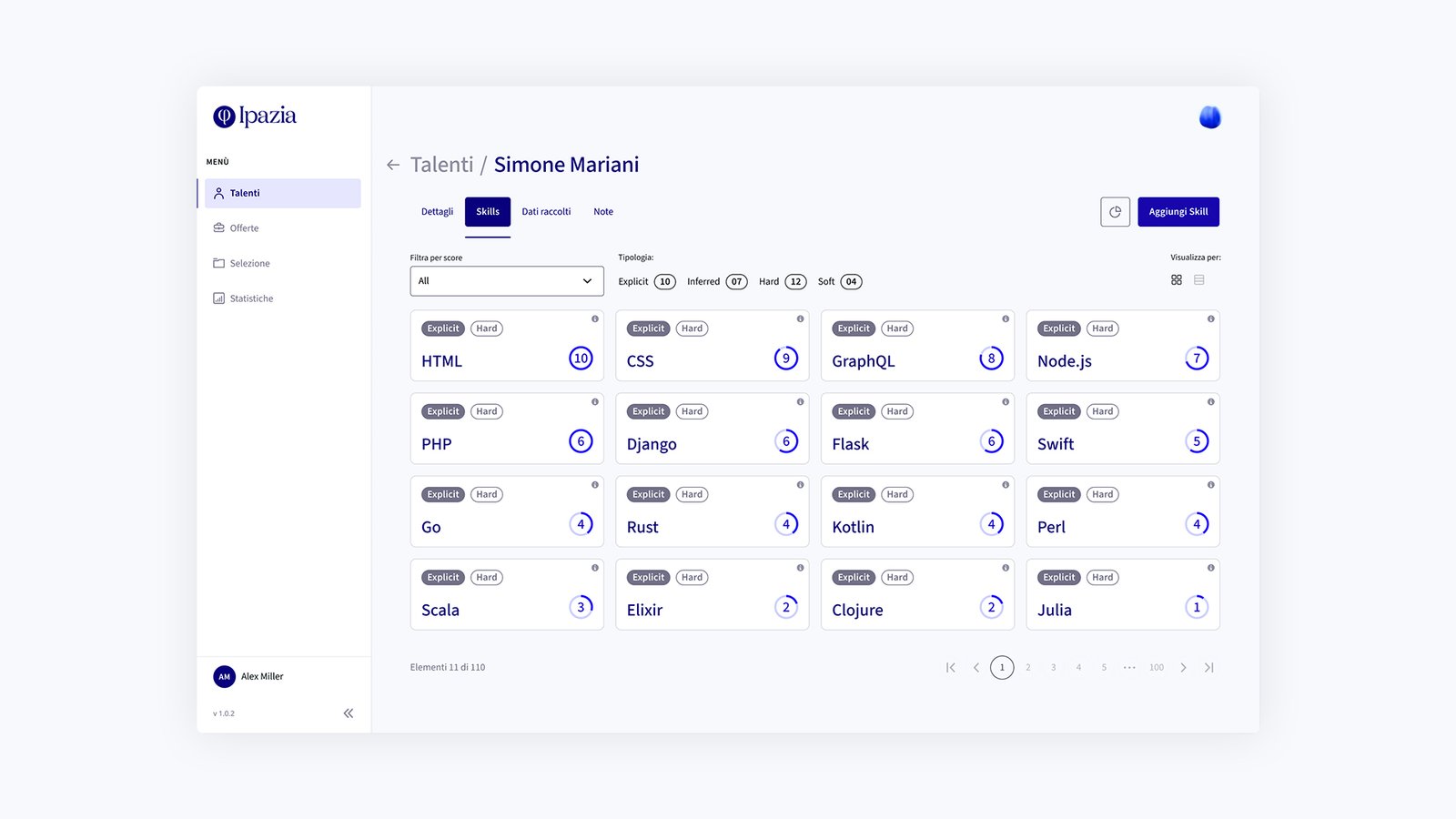
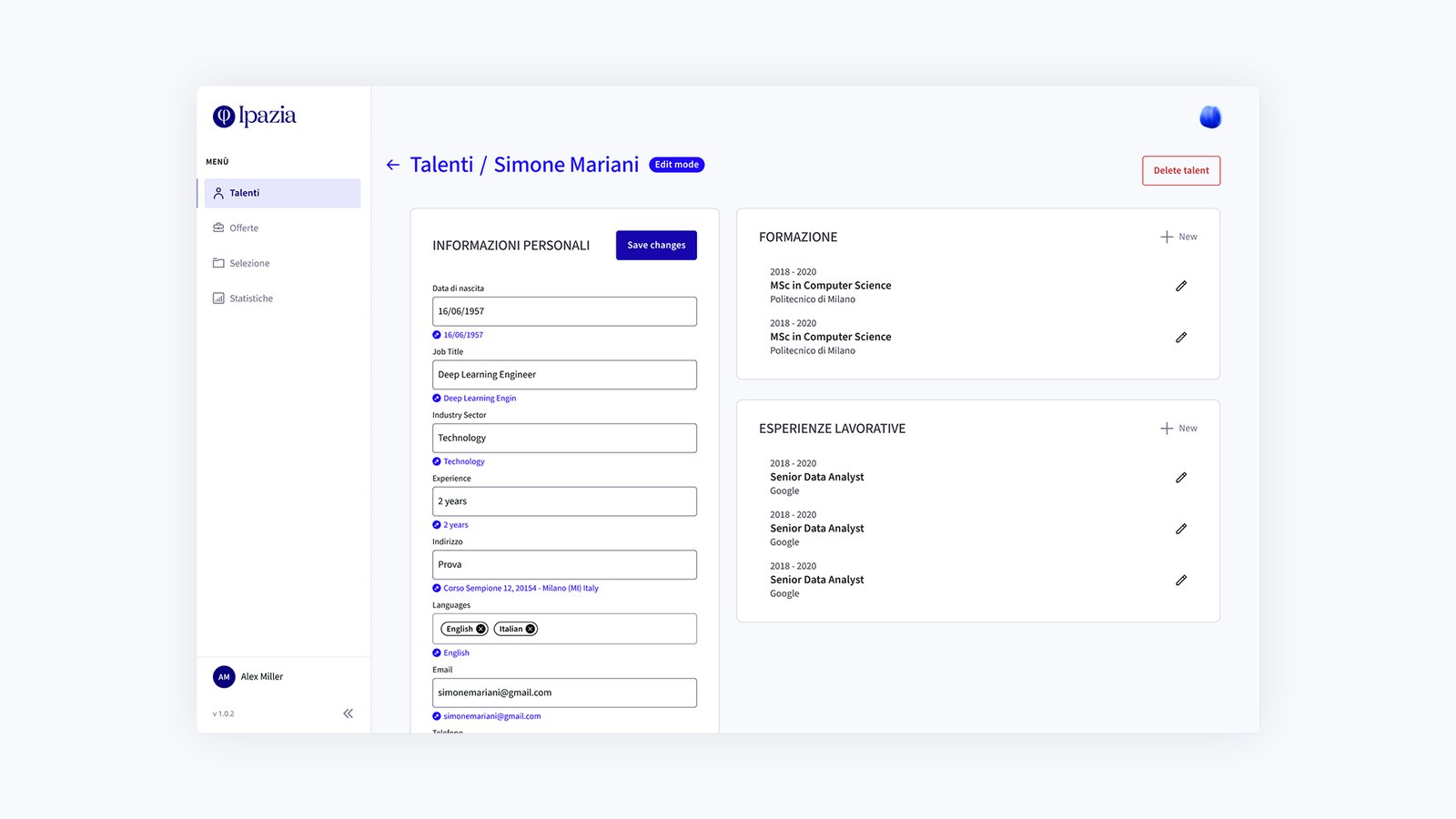
Candidate profiles were organized to help recruiters move from a quick overview to a deeper analysis.

The experience included structured information about the candidate, skills, work experience, education, CV content, internal notes and relevant AI-generated insights.

This helped recruiters compare profiles more easily and understand why a candidate could be relevant for a specific position.

AI summaries and insights

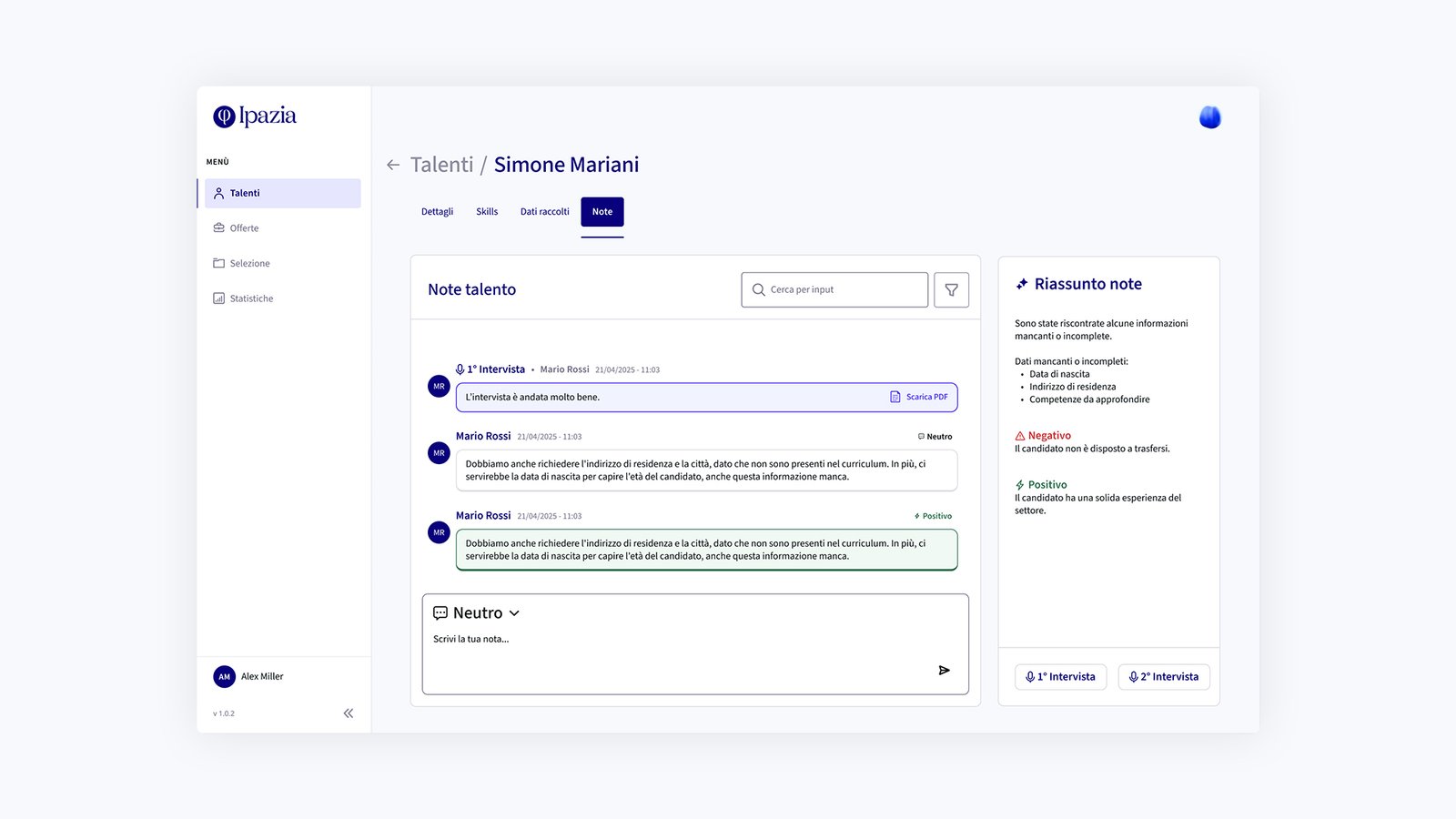
A key part of the experience was the design of AI-assisted summaries.

The AI could help summarize notes, highlight important information and support the recruiter in identifying strengths, missing data or potential areas of attention.

The goal was to reduce cognitive load and make candidate evaluation faster, without making the process feel automated or opaque.

Shortlist and selection management

I also worked on flows related to shortlist creation and selection management.

Candidate cards, filters, statuses and evaluation views were designed to make the process easier to scan, organize and act on.

This allowed recruiters to manage multiple candidates and selection stages inside a clearer and more controlled workflow.

⬤ 05. Optimize

Bringing the platform closer to AI Act-aligned product requirements

As the product evolved, an important part of the work was also connected to making the platform more aligned with the requirements introduced by the AI Act.

The platform needed to move away from a potentially risky AI implementation and become more controlled, explainable and suitable for a regulated context.


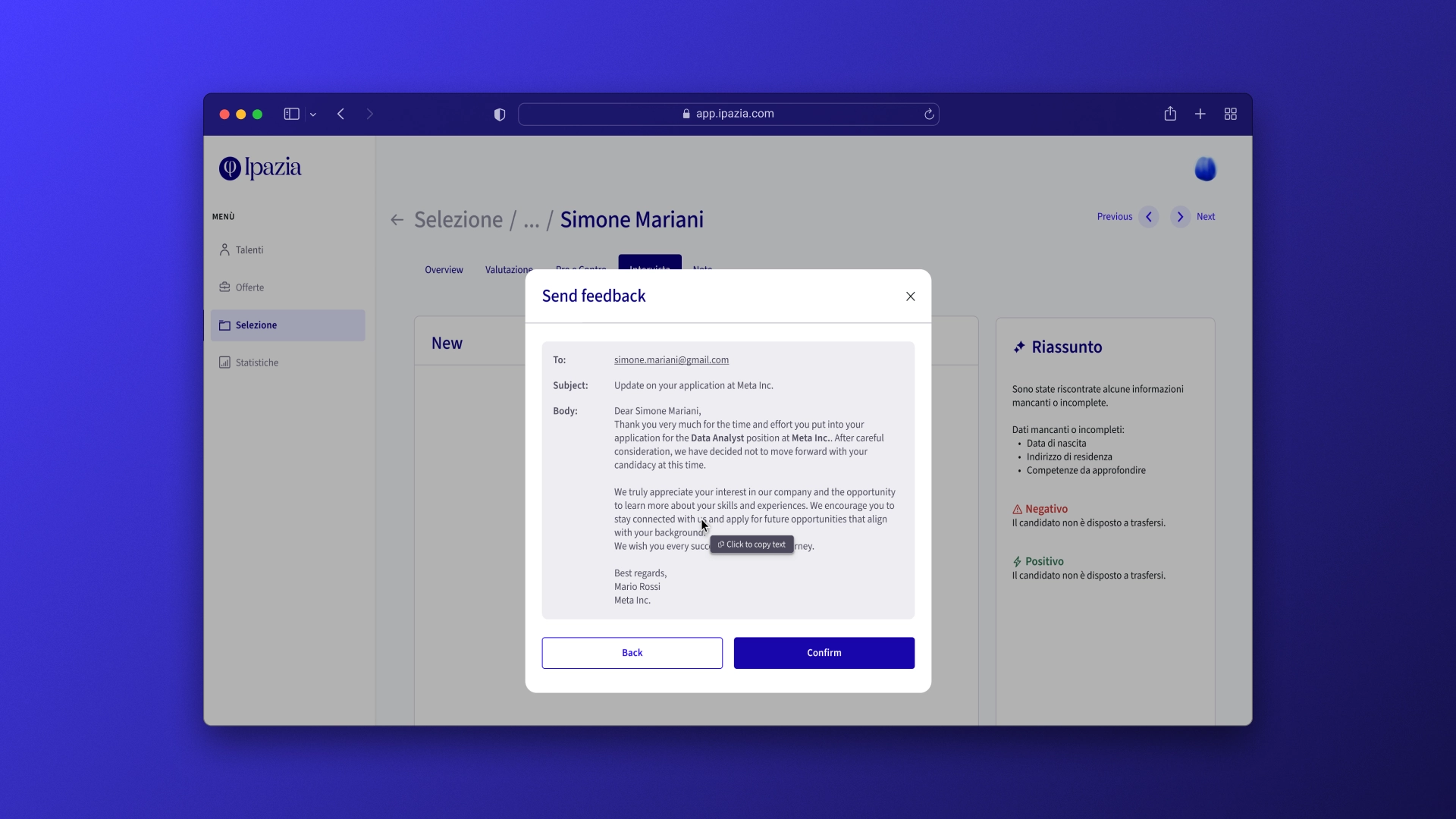
This led to the introduction of new interface components and product patterns designed to support transparency, human oversight and a clearer distinction between AI-generated suggestions and recruiter decisions.

AI was not treated as a black box, but as a system that needed to be understandable, reviewable and integrated into a responsible decision-making workflow.

Impact

The project helped transform Ipazia into a more structured and controlled recruiting platform.

The design work improved the organization of candidate data, clarified the role of AI in the workflow and created a more scalable product structure for future features.

A key impact was the normalization of the platform toward AI Act-aligned principles, introducing new components and interaction patterns to support transparency, human control and responsible use of AI in candidate selection.

The final experience positioned AI as an advisor for recruiters, not as a replacement for human judgment.

Responsibilities

UX strategy for SaaS platform
Product design for HR Tech
Recruiter dashboard design
Candidate search flows
Filters, selection and shortlist systems
AI-assisted experience design
Definition of AI as advisor
Human oversight patterns
AI Act-oriented product normalization
Information architecture
UI design
Product flow collaboration

Back